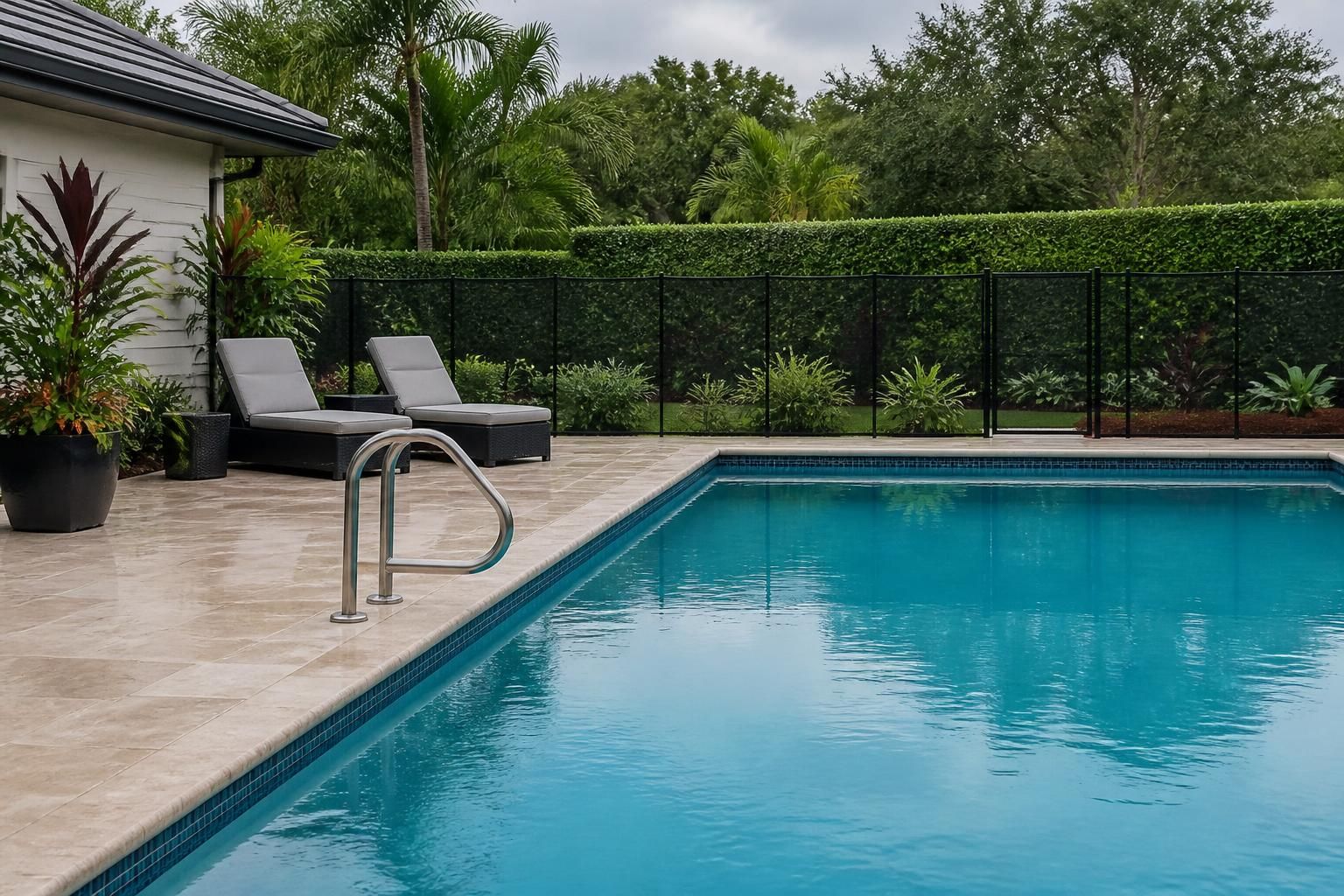
When a storm is approaching, a pool can shift from a backyard feature to a cleanup headache fast. High winds push debris into the water, rain changes chemistry, and falling power or equipment issues can leave the system dirty just when you need it protected.
If your pool already looks cloudy, has leaves packed along the surface, or the waterline is starting to stain after heavy weather, the next step is simple: get the pool ready before the storm and restore it carefully afterward. Supreme Pool Services helps Palm Beach County homeowners protect their pools, reduce damage, and get back to a clean, balanced swim space once conditions clear.
Hurricane pool prep is not about one dramatic step. It is a set of practical choices that help reduce debris, limit equipment strain, and make recovery easier once the weather passes. For most Palm Beach County homeowners, that usually means focusing on water level, circulation, loose items, and chemistry before the first bands arrive.
We look at the pool the way a storm does. Anything floating, resting on the deck, or left exposed can become a problem once winds pick up. Chemical balance matters too, because heavy rainfall can dilute sanitizer and change the water’s behavior fast. A good prep routine keeps the pool easier to manage after the storm and lowers the chance of a long cleanup.
Getting ahead of the weather gives you more options. If your pool is already cleaned and balanced, it stands up better to debris and runoff than one that is overdue for service.
We check conditions that affect recovery, such as debris load, basket condition, water clarity, and whether the equipment area needs attention before the storm arrives.
Every pool is different, but a solid pre-storm checklist usually includes a few core tasks. These are the kinds of steps that make a noticeable difference when the weather turns:
Supreme Pool Services can handle the pool-side work that matters most before a storm. We focus on the details that keep debris from settling in and keep the water from turning into a harder cleanup than it needs to be.
Rainwater can change pool chemistry quickly, especially after a storm that brings a lot of runoff and debris. When sanitizer drops or pH shifts, water can turn dull, harsh, or unstable. That is why pre-storm testing and post-storm testing matter so much.
We use water testing and chemical balancing to help keep your pool ready for changing conditions. For regular service, we also rely on Langelier Saturation Index calculations to keep chemistry aligned with the pool’s actual condition. During storm prep and recovery, that same attention helps us respond to the way the water has changed rather than guessing at it.
After heavy weather, watch for water that looks dull, smells unusual, or leaves behind a rough feel on the surface. Those are common signs the water needs attention before regular use.
A pool can look passable at a glance and still have chemistry that needs correction. Post-storm testing helps prevent the small issues that often become bigger cleaning jobs later.
Storms can be hard on pool equipment even when the pool itself looks manageable. Pumps, filters, heaters, salt chlorine generators, and automation systems all deserve a close look after rough weather.
We inspect, diagnose, and repair the equipment that keeps the pool moving. If a pump is struggling, a filter is overloaded, or a salt system is not producing as expected, it is better to catch that early than let the pool sit dirty while the system works against itself. We work with Pentair, Hayward, Jandy, and most other major brands.
We look for strain, noise, loss of prime, and visible damage that can affect circulation.
Storm debris can load a filter faster than normal use, so we assess whether cleaning or replacement is needed.
Timers and control settings may need attention after a weather event, especially if power was interrupted.
Once the weather passes, the pool often needs more than a quick skim. Leaves, dirt, and fine debris can settle into corners, filter baskets, and the bottom of the pool. Water may also need careful adjustment before it is safe and comfortable again.
Storm recovery service focuses on getting the pool back under control without rushing the process. That means clearing debris, cleaning surfaces, checking baskets, testing water, and reviewing equipment performance. If the pool turned green or started showing algae growth after the weather, we can address that as part of the cleanup.
For many homeowners, the biggest benefit is speed of recovery. A pool that gets prompt attention is much easier to restore than one left untouched after a storm.
Storms can reveal problems that were already there, or they can create new ones. If the water level drops faster than expected, equipment sounds different, or the pool area shows unusual wet spots, those are signals worth checking sooner rather than later.
Leak detection is handled by our in-house team, which helps keep the process consistent from inspection to diagnosis. The goal is to pinpoint where the pool is losing water or where storm-related stress may have affected a component, then decide on the next practical step.
Palm Beach County homeowners want a pool service that shows up with a clear plan and keeps the process straightforward. That is how we approach hurricane prep and storm recovery. Supreme Pool Services serves residential pools across central Palm Beach County, with additional support for commercial properties and HOA/community pools when needed.
Our approach is practical: clean the pool before the weather shifts, protect the water as conditions change, then restore the system carefully afterward. We keep communication simple and useful, and we provide a photo plus chemical readings after each visit so you know what was done and what changed.
If your pool needs prep before a storm or recovery after one, we can help you take the next step without guesswork.
Because our office is based near Westlake, we can respond quickly for Westlake hurricane pool prep and storm recovery throughout the surrounding communities.
The earlier the better. Once weather conditions start changing, there is less time to clear debris, secure the area, and test the water.
Not usually. Water level should be managed carefully based on the pool’s current condition and expected rainfall, not reduced without a reason.
Move anything lightweight or unsecured away from the pool area so wind does not push it into the water or damage equipment.
Rain can dilute sanitizer, shift chemistry, and carry debris into the water. That often changes clarity, color, and surface condition.
Yes. Leaves, dirt, and fine particles can load the filter quickly, which is why basket cleanouts and filter checks matter after a storm.
That usually means the water needs more than a surface cleanup. Treatment should focus on debris removal, water testing, and restoring chemical balance.
If your pool needs storm prep, post-storm recovery, or a careful check after rough weather, Supreme Pool Services is ready to help. Call (561) 312-0970 or email supremepoolsandspa@gmail.com to request a free estimate and get your pool back on track.
Supreme Pool Services
15474 Goldfinch Cir, Westlake, FL 33470, USA
Mon-Fri 6:00 AM-6:00 PM, Sat 6:00 AM-12:00 PM, closed Sunday

Get Started
Tell us about your pool, equipment, or water concerns and we will help you choose the right service plan, repair, or cleanup option for your property.