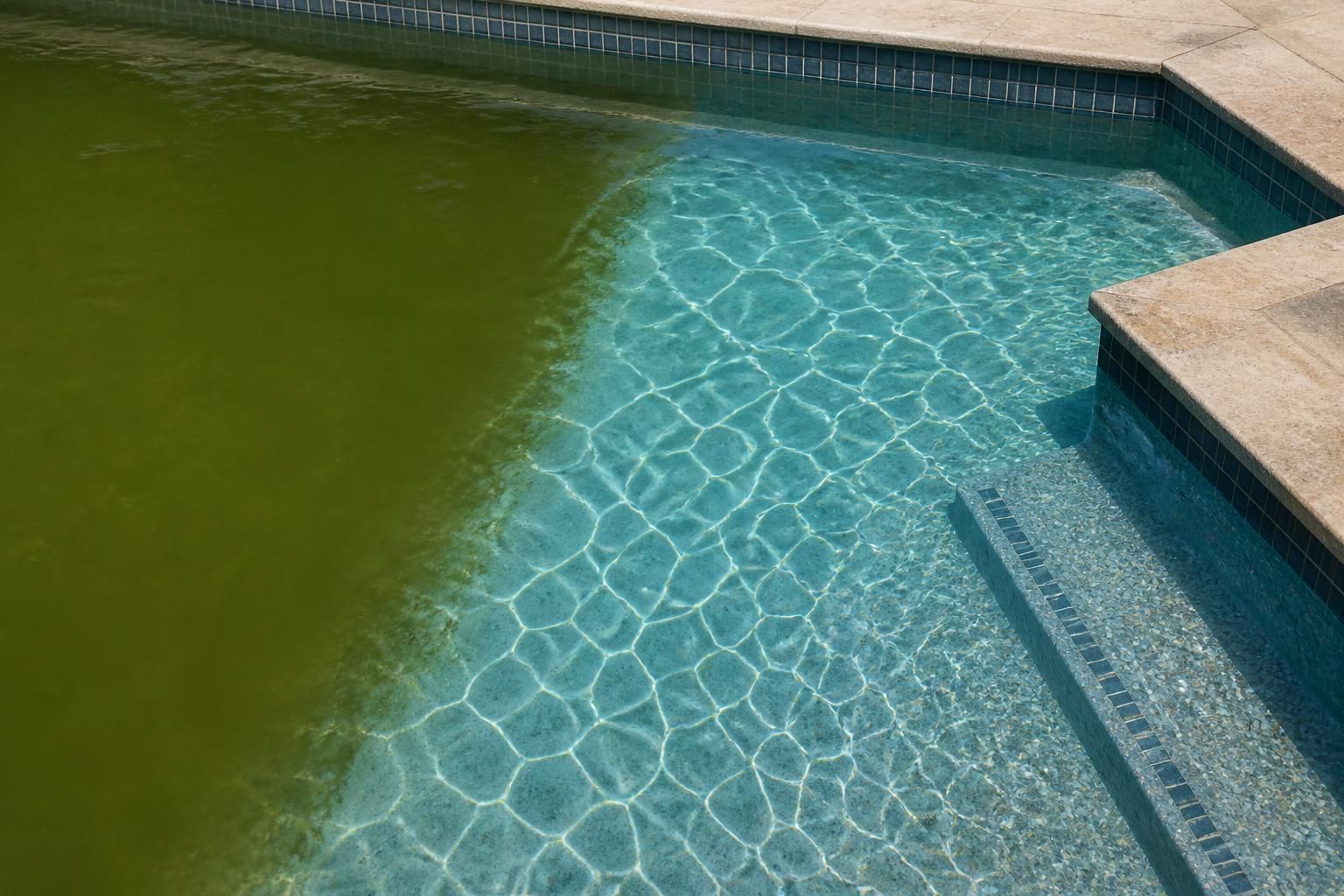
Your pool turned green, the water looks dull, and brushing the walls seems to make little difference. That usually means algae has taken hold and the water balance needs more than a quick chemical splash.
If you are ready to get the water back to clear, swim-ready condition, Supreme Pool Services can assess the pool, treat the algae, and work through the cleanup with a methodical process that gives you a clear path forward.
Green water is more than an eyesore. It often points to active algae growth, poor circulation, or water chemistry that has drifted far enough for sanitizers to lose control. Once algae spreads, it can coat walls, line corners, and settle into steps, skimmers, and other low-flow areas.
When that happens, the pool usually needs a structured cleanup rather than a single chemical correction. We look at the water condition, the visible buildup, and the equipment that moves and filters the water so we can choose the right treatment path.
Supreme Pool Services handles green pool cleanup with a hands-on approach that focuses on removing the algae load, restoring water clarity, and checking for anything that may have contributed to the problem. We do not treat every green pool the same way because the source and severity can vary.
Algae treatment works better when the water chemistry supports it. That is why we do not treat a green pool as a surface problem only. The pool also needs the right chemical balance so sanitizer can do its job and the water is not drifting into a state where algae can return quickly.
We use careful water testing and balance adjustments to support a more controlled cleanup. If chemistry is left too loose, the pool may clear for a moment and then slide right back. The goal is to get the water back into a condition that holds.
Algae clings to surfaces, and that makes brushing a critical part of cleanup. Brushing helps loosen growth from the walls, floor, steps, and tile line so the treatment can reach more of the problem at once.
Vacuuming also matters, especially when algae has already settled into the water or broken free after brushing. Removing what has been loosened keeps it from sitting back in the pool and extending the cleanup.
When a pool turns green, circulation and filtration deserve a close look. A chemical treatment can only do so much if the water is not moving through the system well enough to get cleaned and filtered.
We can inspect the pump, filter, and related equipment for signs that the pool is not circulating the way it should. If the filter is loaded up or the pump is not giving the system enough movement, the cleanup may take longer and require a more deliberate approach.
Supreme Pool Services also works with pool pumps, filters, heaters, salt chlorine generators, and automation systems, so if the algae problem connects to equipment trouble, we can identify that during the visit.
Some pools recover quickly once the water is tested, treated, brushed, and filtered. Others need more time because the algae has spread deeply or the pool has been sitting too long without attention.
Several factors can extend the process:
When that happens, the work is still straightforward. The difference is that the pool may need more than one pass of treatment, brushing, and testing before the water clears to the level you want.
Once the pool is back under control, the next step is keeping algae from returning. For many homeowners, the easiest way to do that is consistent service with regular cleaning and testing instead of waiting until the water changes color again.
Supreme Pool Services offers weekly pool cleaning as the standard service approach, which means problems are noticed earlier and corrected before they become a bigger cleanup project. That routine helps keep water clearer and makes algae less likely to get established again.
We provide green pool cleanup and algae treatment for homeowners across central Palm Beach County, including Loxahatchee, Wellington, Palm Beach Gardens, Jupiter, Jupiter Farms, North Palm Beach, Abacoa, The Acreage, Royal Palm Beach, and West Palm Beach.
If your pool has gone green, you do not need to guess at what the water needs next. Call Supreme Pool Services at +15613120970 or email supremepoolsandspa@gmail.com to request a free estimate and get the cleanup started.
Green or yellow-green water, slick surfaces, cloudy appearance, and visible buildup on walls or steps are common signs. A water test helps confirm what the pool needs.
Yes. Brushing is a key part of algae treatment because it loosens growth from pool surfaces so the chemicals can reach it more effectively.
Yes. If the filter is overloaded or circulation is weak, the pool may not be moving water well enough to clear out contaminants and algae.
Not always. Light algae problems may respond quickly, while heavier buildup can take more time, follow-up testing, and repeated cleaning steps.
Yes. We handle pools with heavy algae buildup and work through the cleanup based on the condition of the water and surfaces.
Yes. Ongoing cleaning and water testing make it easier to catch changes early and keep algae from getting established again.
Get Started
Tell us about your pool, equipment, or water concerns and we will help you choose the right service plan, repair, or cleanup option for your property.